But they don't last forever. Sun exposure, storm impact, and simple age wear them down over time. In South Florida, that process moves faster. Intense heat, high humidity, and hurricane-force winds put extra strain on shingles every single year.
This guide walks through the warning signs, the step-by-step replacement process, how to decide between repair and full replacement, and when it makes sense to call a professional like Fortress Roofing Systems.
TL;DR
- Curling edges, granule loss, cracks, missing shingles, or leaks mean repair or replacement is due
- Spot-repair isolated damage on a younger roof; replace when damage is widespread or keeps coming back
- Core steps: inspect, prep, remove damaged shingles (or full tear-off), install new ones, then recheck seals and drainage
- Call a pro for steep pitches, large damaged areas, warranty concerns, or storm/insurance work
What Are Asphalt Shingles and Why Do They Wear Out?
Asphalt shingles are built from a fiberglass mat coated in asphalt and topped with ceramic granules. They come in three main types:
- Three-tab shingles: single-layer, the most basic option
- Architectural (dimensional) shingles: dual-layer construction, heavier and more textured
- Multilayer/premium shingles: laminated builds, sometimes with impact resistance
Most roofing systems last around 20 years, according to the National Roofing Contractors Association. Actual lifespan depends on climate, installation quality, and maintenance. Manufacturer warranties (often 20-30 years for three-tab shingles) cover materials, not a guaranteed service life.
Shingles shield your home from sun, rain, and wind. They wear out through a predictable cycle:
- UV rays break down the asphalt binder
- Daily heat swings crack and curl the material
- Storms speed damage through wind uplift and impact
In hot, storm-prone climates, that cycle runs faster. Wear builds gradually, then failure can come all at once if warning signs go ignored.

Common Signs Your Asphalt Shingles Need Replacing
Most shingle failures follow patterns you can spot from the ground or during a careful roof check.
Curling or Buckling Shingles
Edges lift or ripple across the surface. Age, prolonged heat, and poor attic ventilation are the usual causes—especially where shingles bake under strong sun year-round.
Granule Loss
Bald, shiny patches on the shingle face and granules collecting in gutters mean the protective mineral coating is wearing off from UV exposure, foot traffic, or plain asphalt aging.
Cracked or Missing Shingles
Visible gaps, exposed underlayment, and torn tabs usually trace to wind uplift, storm impact, or brittle shingles near end-of-life. After high winds, check valleys and windward slopes first.
Leaks and Water Stains
Ceiling stains, musty odors, attic moisture, or daylight through the decking point to failed seals, damaged flashing, or shingles that have worn out.
A leak doesn't automatically mean the whole roof has failed. Sometimes it's one bad flashing joint. When several of these signs show up together, the system is likely breaking down.

How to Replace Asphalt Roof Shingles (Step-by-Step)
Before any tools come out, figure out whether you're dealing with a spot repair or a full tear-off. That decision shapes everything that follows.
Step 1: Inspect and Identify the Scope of Damage
- Walk the roof (or hire an inspector) to check for widespread versus localized damage
- Compare the roof's age against the typical 15–30 year asphalt shingle lifespan
- Check the attic for water stains, daylight through the decking, or mold
- Document storm dates and conditions if you're planning to file an insurance claim
Step 2: Gather Materials and Prepare the Roof
You'll need:
- Replacement shingles (matching existing color/style)
- Roofing nails and a pry bar
- Underlayment and flashing
- Roofing cement
Roof work is dangerous—use a harness, confirm ladder stability, and schedule work for cool, dry days. Clear debris and inspect the decking for rot before laying anything new.
Step 3: Remove Damaged Shingles and Install New Ones
For a spot repair:
- Break the sealant bond on the damaged shingle and the ones surrounding it, using a pry bar
- Remove nails from the damaged shingle and the course directly above it
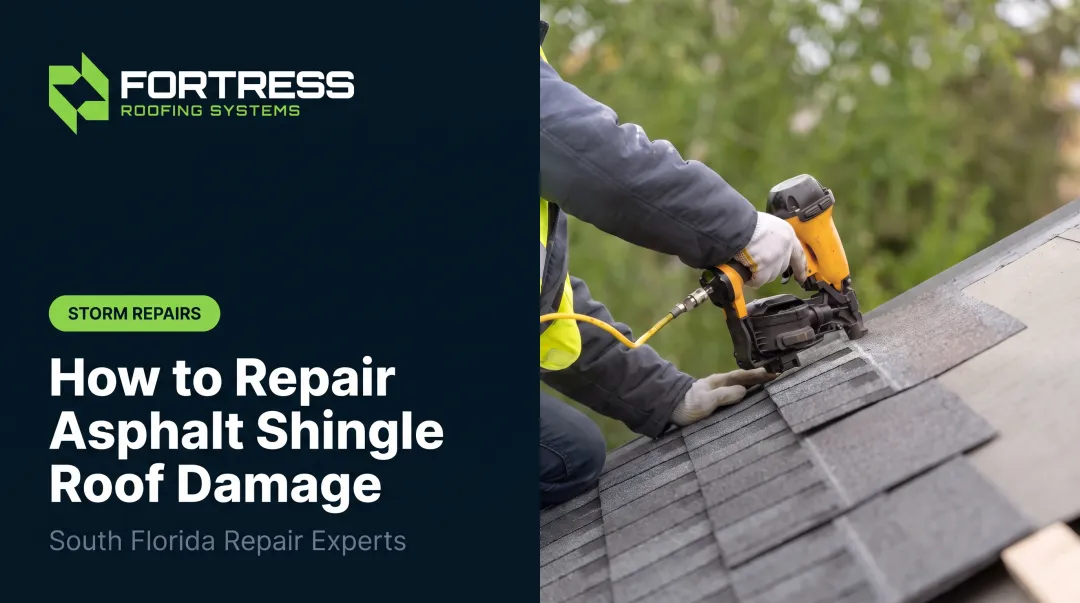
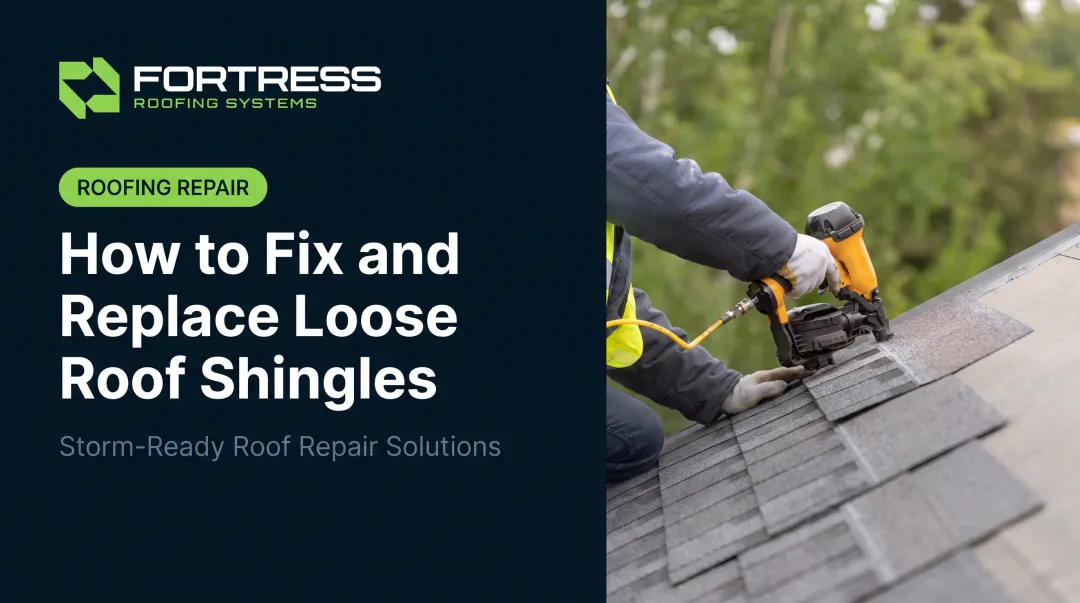
- Slide the new shingle into place, nail it down, and reseal with roofing cement
For a full replacement, you tear off to the deck and rebuild:
- Tear off all existing layers down to the bare decking
- Replace any rotted or damaged boards
- Install new underlayment and flashing
- Lay new shingles in staggered courses, following manufacturer nail-zone specs
Florida's building code requires at least four fasteners per strip shingle, and full tear-off is mandatory once a roof already carries two layers. Full replacements also typically need permits and a licensed contractor—especially when an insurance claim is involved.

Step 4: Final Inspection and Cleanup
- Confirm every shingle is sealed and flush against its neighbors
- Verify flashing, ridge caps, and vents are secure
- Sweep the yard and clean gutters of loose nails and granule debris
Repair vs. Full Replacement: How to Decide
Cost, roof age, and damage extent all factor into this call. Here's how it typically breaks down.
A Few Missing or Damaged Shingles
- Repair: Spot-replace if the damage is isolated and the roof is under 15 years old
- Replace: Choose full replacement if the same spot keeps failing
Roof Nearing End of Warranty or Lifespan
- Repair: A temporary fix can work if the roof is under 20 years old with no structural issues
- Replace: Recommended once shingles are out of warranty or past the 20-25 year mark
Storm or Hurricane Damage
- Repair: Fine for minor wind or hail damage limited to a few shingles
- Replace: Necessary for widespread uplift, exposed decking, or leaks that keep recurring after major storms
That last scenario is common across South Florida, where Fortress Roofing Systems assists homeowners with both full replacements and insurance claim coordination after named storms roll through.
DIY vs. Hiring a Professional Roofer
Spot repairs look simple enough on paper. In practice, most roofing experts discourage the DIY route, and the data backs that up.
Roofing contractors accounted for 110 of the 423 fall-related construction fatalities in 2023, roughly 26% of the total, according to the Bureau of Labor Statistics.
Beyond safety, DIY work can create problems that only show up later:
- Sealing quality: A slightly off nail placement can undo years of weather resistance
- Code compliance: Local permitting and inspection requirements are easy to miss without experience
- Warranty protection: Certified installers, like Fortress's Master Elite Installers, can qualify homeowners for enhanced manufacturer and workmanship coverage
Professional crews also move faster. Fortress typically offers service response within a 72-hour window and completes most residential replacements in 1-3 days, depending on roof size and complexity. That speed matters in a region where the next storm system is never far off.

Frequently Asked Questions
How much does it cost to replace an asphalt shingle roof?
Total cost depends on roof size, shingle grade, pitch, tear-off requirements, and local labor rates. Materials and complexity both swing the final number, so a professional quote is the most reliable way to get an accurate figure.
Can you install new asphalt shingles over existing shingles?
Sometimes, but only over one existing layer if the deck is sound and local code allows it. Florida code requires full tear-off once two layers already exist, and laminated shingles usually perform better with a complete replacement anyway.
Can you replace just one shingle on an asphalt shingle roof?
Yes, using the pry-bar-and-reseal method described above. You'll need a matching shingle in color and style, and the surrounding shingles must be in good enough condition to reseal properly.
What should I do if shingles fall off my asphalt shingle roof?
Cover the exposed area temporarily with a tarp to prevent water intrusion, then contact a roofer as soon as possible. Even a small gap can let water reach the decking quickly during heavy rain.
What is the best time of year to replace an asphalt shingle roof?
Mild, dry seasons are ideal for installation. In South Florida, scheduling replacement before hurricane season begins each June is especially important for avoiding storm-related delays and damage.
Does homeowners insurance cover asphalt shingle roof repair?
Coverage typically applies to sudden damage from a covered peril, like wind or hail, not gradual wear and tear. Fortress Roofing Systems offers insurance claims assistance to help homeowners document damage and work with adjusters.