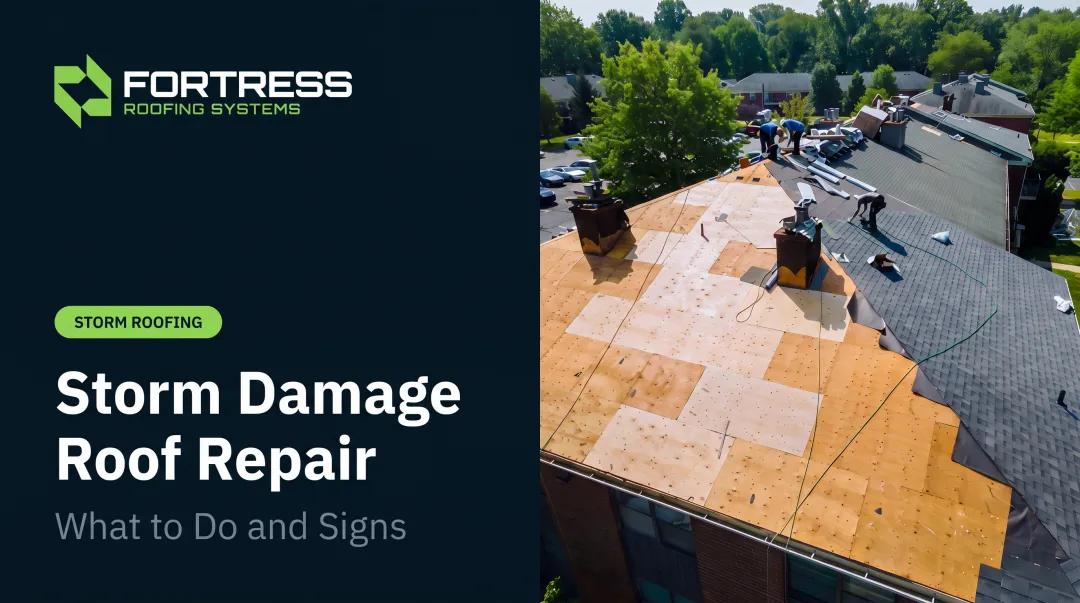
Here's the problem: hail damage is often invisible from the ground. Homeowners look up, see nothing obvious, and move on with their lives. Weeks later, a leak shows up. By then, the insurance claim window may be closing and the damage has spread.
This guide walks through the warning signs, the inspection process, repair versus replacement decisions, insurance guidance, and when it's time to call a professional like Fortress Roofing Systems.
TL;DR
- Hail damage shows up as shingle bruising, granule loss, and dented flashing or gutters.
- Localized damage is often repairable; widespread damage usually means replacement.
- A proper inspection covers the roof surface, accessories, exterior property, and interior ceilings.
- DIY roof inspections risk missed damage and fall injuries. Call a professional.
- Florida requires prompt claim reporting: one year for new claims, 18 months for supplemental ones.
What Is Hail Damage to a Roof?
Hail damage is physical impact trauma to shingles, flashing, and roofing accessories caused by falling ice pellets during a thunderstorm. The damage goes beyond surface appearance.
Every hailstone that strikes a shingle can dislodge the protective granule layer, bruise the asphalt mat underneath, or create micro-fractures. GAF notes that once granules are gone, exposed asphalt takes direct UV exposure and becomes brittle over time — which eventually leads to leaks.
Hail damage often looks minor—a few dark spots, some granules in the gutter. The National Roofing Contractors Association still treats it as a functional issue, not a cosmetic one. Damage counts when it:
- Impairs the roof's ability to shed water
- Shortens the roof's expected service life
If either is true, it's real damage—even when it doesn't look dramatic.

Signs of Hail Damage on Your Roof
Damage patterns vary depending on your roofing material, the size of the hailstones, and which direction your roof slopes faced the storm. Here's what to check.
Shingle-Level Signs
- Round bruises or dark spots: soft to the touch, often black
- Cracked or split shingles from direct impact
- Granule loss exposing the asphalt mat underneath
- Random impact pattern: hail doesn't hit in straight lines like foot traffic or installation defects would
Accessory and Component Signs
- Dented roof vents, flashing, or skylight frames
- Dented or dinged gutters and downspouts
- Bent or displaced chimney caps
Non-Roof Indicators
South Florida homes often show hail evidence elsewhere on the property, too:
- Damaged or torn window screens
- Chipped or pitted exterior paint
- Dented A/C condenser units
What Hail-Damaged Shingles Look Like
Picture a bruise on skin: a soft, dark, slightly indented spot. Sometimes the surrounding asphalt looks shinier where granules have been knocked away.
Aging shingles blister and curl in predictable ways tied to sun exposure. Algae leaves greenish-black streaks that run with water flow. Hail leaves scattered, isolated impact marks. Confusing the two is a common misdiagnosis that either leads homeowners to file unnecessary claims or, worse, ignore real damage.
The Hail Damage Roof Inspection Process
Climbing onto your own roof after a storm is risky. Beyond the fall hazard, most homeowners miss subtle bruising that a trained eye catches immediately. Insurance adjusters also expect documentation that meets specific standards, which is hard to produce without experience.
Here's what a proper inspection covers:
- Roof surface and shingle review — A technician checks every slope for bruising, granule loss, and cracking, not just the areas visible from the driveway.
- Component and accessory check — The technician inspects vents, flashing, chimney caps, and gutters for dents or displacement.
- Exterior property assessment — They assess siding, window screens, trim, and outdoor fixtures as supporting evidence of storm impact.
- Interior review — If leaks are suspected, they examine the attic and ceilings for water stains or moisture intrusion.
- Documentation for insurance — They compile a detailed report with high-resolution photos and repair recommendations tailored to what adjusters need to see.

Fortress Roofing Systems offers professional inspections with service typically available within 72 hours of contact across its five-county South Florida coverage area : Miami-Dade, Broward, Palm Beach, Martin, and St. Lucie counties.
Repair vs. Replacement: Making the Right Call
Not every hail-damaged roof needs to come off. The decision comes down to cost, roof age, and how extensive the damage is.
When Repair Is Enough
- A limited number of shingles show damage
- No structural issues or water penetration
- The roof is relatively new and otherwise sound
When Replacement Is Necessary
- Widespread granule loss appears across multiple slopes
- There's evidence of leaks or ceiling stains
- The roof is nearing the end of its expected lifespan (most asphalt roofs are designed for roughly 20 years, per NRCA)
Can hail damage be repaired without replacing the whole roof? Often, yes. Localized damage on one slope is typically repairable. But there's a catch: if your shingle line has been discontinued and the manufacturer no longer makes a matching product, insurers may require full replacement rather than a mismatched patch job.
How long can a roof last after hail damage if it's ignored? There's no fixed number, but the trajectory is bad. Exposed asphalt mat accelerates UV damage, and micro-fractures widen with every subsequent storm. What starts as a repairable problem can turn into a multi-thousand-dollar leak issue within a couple of storm seasons.
Whichever path you choose, installation quality affects how long the fix lasts. Fortress Roofing Systems holds Master Elite Installer status (a top-tier GAF designation) and backs both repairs and replacements with workmanship warranties, giving homeowners a clear baseline for the long-term call.

Navigating Insurance Claims for Hail Damage
Most homeowner policies cover hail as a named peril, but coverage details and exclusions vary by insurer. Florida law also puts a clock on how long you can wait.
Key deadlines:
- 1 year to file a new or reopened property claim
- 18 months for a supplemental claim
Since December 2022, these are Florida's maximum notice periods under state insurance regulation. Treat them as hard deadlines, not suggestions.
When you file, adjusters typically look for:
- Clear, dated photos of the damage
- A scope of work that matches the storm reported
Your payout also depends on whether the policy uses Replacement Cost Value (RCV) or Actual Cash Value (ACV). RCV covers full replacement cost; ACV subtracts depreciation for age and wear.
Fortress Roofing Systems provides dedicated insurance claims assistance: documenting damage from roof deck to fascia, coordinating with adjusters, and handling the paperwork so you are not managing it alone.
Common Mistakes to Avoid After Hail Damage
A few wrong moves after hail can cost you coverage and leave hidden damage unrepaired.
- Delaying the inspection: Water intrusion worsens fast, and missing your reporting window can mean claim denial.
- Hiring unlicensed "storm chaser" contractors: These crews often collect payment or insurance proceeds after a storm, then vanish mid-job—a risk the NAIC flags for homeowners.
- Accepting a settlement without a second opinion: An insurer's first estimate may miss damage a professional inspection would find.
Preventive Measures for South Florida Homeowners
A few proactive steps can limit hail and storm damage before severe weather hits South Florida:
- Schedule seasonal inspections before hurricane and hail season in spring to catch loose shingles, worn sealants, and wind-uplift issues early
- Choose Class 4 impact-rated shingles at replacement. Fortress's Storm Shingle System pairs Class 4 impact resistance with 150 MPH wind resistance
- Confirm insurance discounts with your carrier; Class 4 ratings may qualify, but savings aren't guaranteed
- Keep gutters and downspouts clear so post-storm water doesn't back up and compound existing damage
Frequently Asked Questions
How much will insurance pay out for hail damage?
Payout depends on your policy type (replacement cost vs. actual cash value), your deductible, and how thoroughly the damage is documented. A professional inspection report strengthens your claim considerably.
Does homeowners insurance cover hail damage to roofs?
Most standard policies cover hail as a named peril, but exact terms, exclusions, and roof-age conditions vary by insurer. Check your specific policy language.
Can hail damage to a roof be repaired without replacing the roof?
Localized damage on one slope can often be repaired. Widespread impact or a discontinued shingle match may push the insurer toward full replacement.
Is it worth making an insurance claim for hail damage?
Yes, when the damage exceeds your deductible and is professionally documented. Keep in mind repeated claims can affect future premiums.
Is it worth repairing hail damage to a roof?
Yes. Prompt repairs prevent the leaks, rot, and structural issues that follow when hail leaves the asphalt mat exposed.
What do shingles look like with hail damage?
Look for round, dark bruise spots, granule loss that exposes the asphalt underneath, and impact marks scattered randomly rather than in a pattern.
Suspect hail damage on your South Florida property? Fortress Roofing Systems offers professional inspections with service typically available within 72 hours, plus insurance claims assistance to help you document damage and deal with adjusters. Call 772-207-3627 or reach out at customer@fortressroof.com.