That assumption is risky. A broken concrete tile can let water and UV rays reach and damage the underlayment beneath it, and foot-traffic breakage should be addressed promptly rather than left exposed to the elements (Eagle Roofing).
This guide walks through the tools you'll need, a step-by-step replacement process, what to expect on cost, and — just as important — when this job stops being a DIY project and starts requiring a licensed professional.
Key Takeaways
- DIY single-tile fixes suit only minor, accessible damage with matching profiles and sound underlayment
- Fall risk makes licensed, insured contractors the safer default for any roof access
- South Florida storms and HVHZ codes often require professional-grade tile repair
Tools and Materials You'll Need
Before climbing anywhere, gather what you need. Tile roofs are typically fastened with nails, screws, or adhesive foam. The right method depends on your climate, location, and how the manufacturer originally installed the roof — there's no single approach that works everywhere (Eagle Roofing / TRI Alliance).
Have these tools and materials ready:
- Matching replacement tile (same material, size, and profile)
- Manufacturer-approved fasteners or adhesive
- Flat pry bar and hammer for lifting and fastening
- Sturdy, properly positioned ladder
- Gloves and non-slip footwear
- Fall-protection system when working above roof height
Tile matching matters more than most homeowners expect. A damaged, cracked, or broken tile cannot legally be reinstalled under the 2023 Florida Building Code, and any replacement must match the material, size, and profile of the surrounding tiles. If your exact tile is discontinued, sourcing a compatible replacement can take real legwork.

Fortress Roofing Systems' Master Elite Installer team works with tile roofs across South Florida and can help source matching tiles when the original product is hard to find.
How to Replace a Roof Tile: Step-by-Step
Rushing this process, or skipping the diagnostic steps, is how homeowners end up with recurring leaks or a second broken tile a few weeks later. Take it slow.
Step 1: Assess the Damage and Prep for Safety
- Never work on a wet roof or one with rain in the forecast . Tile surfaces get dangerously slick
- Inspect the tiles surrounding the damaged one, along with any visible underlayment, for hidden cracks or water staining
- Set up your ladder on stable, level ground and use a compliant fall-protection system before climbing
Step 2: Remove the Damaged Tile
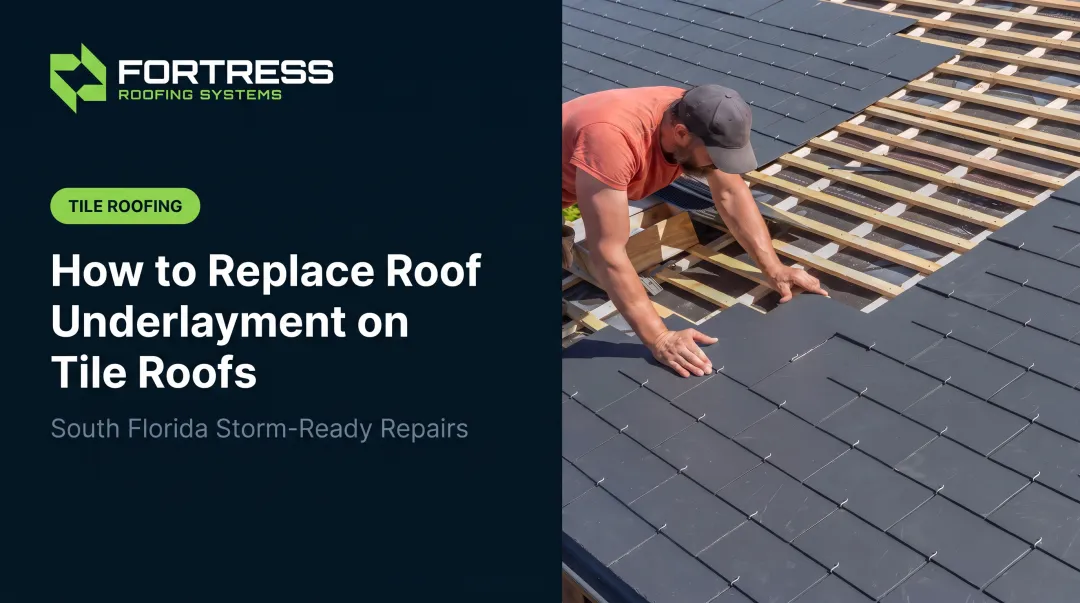
Carefully lift the overlapping tile positioned above the damaged one using a pry tool or the flat side of a hammer. Once it's lifted, remove any fasteners securing the broken tile below and slide it free.
Stop here and inspect the underlayment. If you see cracks, tears, or staining underneath, do not proceed with a straightforward tile swap. Compromised underlayment should not be covered with a new or salvaged tile . The water barrier needs to be addressed first (TRIA, 2022).
Step 3: Prepare the Area and Install the New Tile
- Confirm the underlayment beneath is sound before installing anything new
- Slide the replacement tile into position, aligning it with the pattern of surrounding tiles
- Fasten it using the method appropriate to your roof (nails, screws, or adhesive foam) . Don't guess
- Press down firmly and evenly to seat the tile without cracking it
Step 4: Secure and Inspect the Repair
Reposition the overlapping tile back over the new one. If you need to move across the roof at all, walk only on tiles that are fully secured . Unsupported tiles crack easily underfoot.
Once finished, check the repair from the ground, and from inside the attic if accessible, looking for light gaps or signs of moisture intrusion.

When to DIY vs. Call a Professional
Single-tile replacement is manageable in narrow circumstances. Outside those cases, professional help is the industry-recommended standard. The labor adds up quickly, and roof access carries real fall risk.
Reasonable for a confident homeowner:
- One or two accessible tiles on a low-slope section with no visible underlayment damage
Call a professional when you see:
- Multiple broken or slipped tiles. Widespread breakage signals a need for full inspection, not spot repairs.
- Steep slopes or multi-story homes. Fall risk climbs sharply above 6 feet. OSHA requires a full fall-protection system for this work, not just a harness (OSHA 1926.501).
- Storm or hurricane damage. After a wind event, have a trained professional assess the full roof. Visible breakage often comes from hail or flying debris, not wind alone. In South Florida's High-Velocity Hurricane Zone, code requires a qualified licensed contractor.
- Underlayment or decking damage. This requires a proper lift-and-relay repair, not a tile swap.

Fortress Roofing Systems handles these scenarios across Miami-Dade, Broward, Palm Beach, Martin, and St. Lucie counties. Master Elite Installers provide professional evaluation, with service typically available within 72 hours of your call.
Cost of Roof Tile Replacement
Here's the honest answer: there's no reliable, universal per-tile price you can count on. Costs vary too much by tile availability, material, and whether underlayment repair is also needed. Be skeptical of any generic number quoted without an inspection.
What actually drives your cost:
- Tile material — concrete and clay/terracotta tiles have different sourcing costs and availability
- Availability of the exact match — discontinued tiles may require harvesting sound tiles from a less visible part of the roof
- Underlayment condition — repairs beneath the tile increase labor and material cost
- Wind and code requirements — South Florida product-approval rules dictate which materials and attachment methods are compliant
If storm damage caused the failure, you may not pay out of pocket. Fortress Roofing Systems provides insurance claims assistance: documenting damage from deck to fascia, working directly with your adjuster, and handling the paperwork so you are not navigating the claims process alone.

Common Mistakes to Avoid
A solid tile swap can still fail if you hit one of these pitfalls:
- Using a mismatched tile. A tile that's close in size or color but not an exact profile match compromises the roofline's look and its water-shedding performance.
- Walking on unsecured tiles. This is one of the fastest ways to turn a one-tile repair into a three-tile repair.
- Skipping the post-repair check. Always look for light gaps or moisture signs from the attic — a repair that looks fine from the ground can still be letting water in.
Frequently Asked Questions
How much does a replacement roof tile cost?
There's no reliable universal per-tile price: cost depends on tile material, availability of an exact match, and site accessibility. A local inspection and quote is the only accurate way to know your cost.
How much does it cost to replace a tile roof on a 4,000 square foot house?
Full tile roof replacement costs scale with material choice and actual roof area (not floor area), plus site-specific factors like structural condition. Request a detailed, in-person estimate rather than relying on a generic online figure.
Can you just replace roof tiles?
Yes. Individual tiles can generally be replaced without a full re-roof, as long as damage is limited and the underlayment is intact and undamaged.
When should a tile roof be replaced?
Consider full replacement when damage is widespread, leaks keep recurring, or a significant share of tiles are cracked or displaced — all signs the underlying system, not just individual tiles, has failed.
Is it safe to walk on a tile roof to make repairs?
Only trained professionals should routinely walk tile roofs; even then, stepping only on the supported bottom portion of each tile matters. For steep or multi-story roofs, call a licensed contractor instead of climbing up yourself.
How do I match a replacement tile to my existing roof?
Check the tile's manufacturer, profile, and color against your existing roof, and consult a roofing contractor if the exact match is discontinued. Fortress Roofing Systems' Master Elite Installers can help source hard-to-find matches through their supplier network.