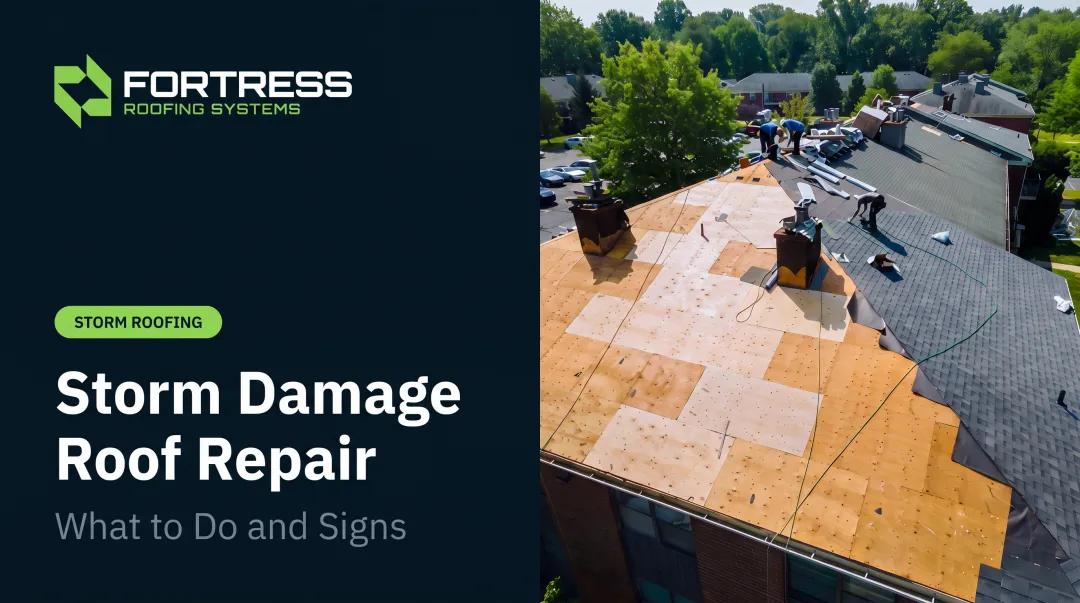
You're not alone. Wind and hail claims are among the most common homeowners insurance filings in the country, with a national average severity of $13,511 per claim between 2018 and 2022, according to Triple-I data. In Florida, where hurricane season brings its own deductible rules and tight filing deadlines, the stakes are even higher.
This guide breaks down what's covered, what isn't, how to file correctly, and how Fortress Roofing Systems supports South Florida homeowners through the entire claims process.
Key Takeaways
- Wind, hail, and lightning damage are typically covered; flood and earthquake damage are not
- Photo and video documentation before cleanup can make or break your settlement
- Florida law requires initial claims within 1 year of the loss date
- Work with a claims-experienced roofing contractor to avoid underpayment
What Does Homeowners Insurance Typically Cover After a Storm?
Most standard homeowners policies cover wind, hail, and lightning damage to your roof and structure, minus your deductible. This typically includes:
- Fallen trees that damage your roof or home
- Wind-driven rain that enters through a storm-created opening
- Power surges caused by lightning strikes
- Structural damage from windstorm events
Florida's Hurricane Deductible Is Different
Here's where it gets tricky for Florida homeowners. Instead of a flat dollar deductible, hurricane damage often falls under a percentage-based deductible.
Insurers must offer options at 2%, 5%, or 10% of your dwelling coverage limit, per Florida Statute 627.701. On a $400,000 dwelling limit, a 5% hurricane deductible means $20,000 comes out of your pocket before insurance kicks in.
This deductible generally applies once per calendar year, regardless of how many storms hit your home.
RCV vs. ACV: Why It Matters for Your Payout
Replacement cost value (RCV) pays what it actually costs to repair or replace your roof, with no depreciation deducted. Actual cash value (ACV) subtracts depreciation based on your roof's age and condition.
Under Florida law, even RCV policies typically pay ACV first, then release the remaining amount once repairs are completed and documented. An older roof with visible wear will settle for less under ACV than a newer one. Document your roof's condition before storm season starts so you have a clear baseline if you need to file.

What Storm Damage Is NOT Covered by Homeowners Insurance?
Not every storm-related loss falls under your homeowners policy. Understanding the gaps now saves you from a nasty surprise later.
Flood damage, including storm surge, sits outside standard homeowners coverage entirely. FEMA confirms most policies exclude it, so you need a separate NFIP or private flood policy.
That distinction matters after a hurricane. If wind tears open your roof and rain gets in, that's typically covered. If storm surge floods your first floor, it isn't — unless you carry flood insurance.
Other common exclusions:
- Earthquake damage — excluded nationally, though rarely a Florida concern
- Neglect or lack of maintenance — insurers can deny claims tied to pre-existing wear
- Pre-existing damage — anything documented before the storm won't be covered by this claim
Before hurricane season starts, pull out your policy and actually read the exclusions section. It's tedious, but it's the only way to know what you're working with before disaster strikes.
Step-by-Step: How to File a Storm Damage Insurance Claim
Filing correctly from day one protects your settlement. Here's the sequence that works:
- Document everything before cleanup begins. Take photos and video from multiple angles, including close-ups of hail dents, missing shingles, and interior leaks. Use a ruler or measuring tape for scale where it helps show damage extent.
- Make temporary repairs only. Tarp exposed areas, board broken windows, and keep every receipt. Florida law recognizes these costs as reimbursable.
- Contact your insurer immediately. Note your claim number and the name of your assigned adjuster.
- Gather your policy details. Have your policy number, deductible amount, and the exact date and time of the storm ready.
- Be present for the adjuster's inspection. Better yet, have a roofing contractor walk the property with you.

Florida gives homeowners one year from the loss date to file an initial or reopened claim, and 18 months for supplemental claims, under Florida Statute 627.70132. Waiting until the deadline is a mistake. Insurers can question delayed reporting.
Fortress Roofing Systems assists at this stage with a professional damage assessment, documenting conditions from the roof deck to the fascia. That documentation is prepared for submission to your insurer.
Working With Your Insurance Adjuster
The adjuster's job is to verify damage and determine what your insurer pays. That's it. They don't work for you, and their estimate isn't automatically the final word.
Before accepting any settlement offer, get an independent estimate from a roofing contractor and compare it against the adjuster's report. Discrepancies are common, especially on hidden damage like compromised decking or underlayment that isn't visible from the ground.
If you disagree with the adjuster's findings, you can hire a public adjuster independently. Unlike the insurer's adjuster, a public adjuster represents you, though they can't provide legal advice.
Their fees are capped by state law:
- Generally 20% of the claim payment
- 10% for claims tied to a governor-declared emergency within the following year
Fortress Roofing Systems' team typically attends these inspections as the homeowner's technical representative, explaining the scope of necessary repairs directly to the adjuster and advocating for accurate coverage.

What to Do If Your Claim Is Denied or Underpaid
A denial or lowball offer isn't the end of the road. You still have several ways to challenge the decision or push for a fairer payout.
- Request a re-inspection or a different adjuster if findings don't match the visible damage
- File a complaint with Florida's Department of Financial Services Consumer Services line
- Hire a public adjuster to independently value and negotiate your claim
- Consult an insurance attorney if the dispute heads toward litigation
Florida's Department of Financial Services also offers nonbinding residential property mediation as a middle step before things turn adversarial. Try that route before jumping to legal action: it's faster and doesn't require attorney fees.
Protecting Your South Florida Home Before and After Storm Season
Prevention beats disputes. Regular roof inspections create a maintenance record that helps counter an insurer's "wear and tear" argument when you file a legitimate storm claim.
A few habits worth building:
- Schedule a professional inspection annually, and again after any severe weather, even without visible damage
- Keep dated photos and inspection reports on file
- Confirm your roofing contractor holds recognized certifications
When storm damage does hit, speed matters. Fortress Roofing Systems operates on a 72-hour response window for emergency, hurricane, and storm-damage service calls across its five-county South Florida service area. Crews typically secure the property and complete an initial assessment quickly, limiting further water intrusion.
The company's installers carry Master Elite certification, GAF's top-tier designation. Fortress backs its storm and Class 4 impact-rated shingle installations (tested to the UL 2218 standard for 150 MPH wind resistance) with manufacturer and workmanship warranties. Strong warranties won't guarantee an insurance payout, but they do ensure repairs hold up through the next storm.

Frequently Asked Questions
What damage is not covered by homeowners insurance?
Flood damage, including storm surge, and earthquake damage are typically excluded from standard homeowners policies. Neglect, lack of maintenance, or pre-existing damage can also lead insurers to deny a claim.
How long do I have to file a storm damage claim in Florida?
Florida law requires initial or reopened property claims to be reported within one year of the loss date, and supplemental claims within 18 months. Acting quickly strengthens your position and avoids disputes over delayed reporting.
Will filing a claim raise my insurance premium?
Filing a claim can affect future premiums, though there's no fixed statutory increase. Delaying repairs after storm damage often costs more in the long run than any potential premium change.
Should I get a roofing contractor's estimate before or after the adjuster visits?
Getting an estimate beforehand gives you a benchmark to compare against the adjuster's findings. It also helps ensure hidden damage, like compromised decking, doesn't get missed during the inspection.
Can a roofing company help me with my insurance claim?
Yes. Contractors like Fortress Roofing Systems assess damage, prepare detailed documentation for insurers, and communicate directly with adjusters on the homeowner's behalf throughout the claims process.
What's the difference between actual cash value and replacement cost coverage?
Actual cash value (ACV) subtracts depreciation based on your roof's age. Replacement cost value (RCV) covers the full repair cost. Florida policies often pay ACV first, then release the balance after repairs are done.
If your roof took a hit this storm season, don't wait until the damage worsens.
Fortress Roofing Systems serves homeowners across Miami-Dade, Broward, Palm Beach, Martin, and St. Lucie counties with rapid response and insurance claims support. Call 772-207-3627 to schedule an inspection.