South Florida homeowners feel this faster than most. Intense UV exposure, thick humidity, and hurricane-force winds put extra stress on every shingle course. This guide walks through common damage types, step-by-step repair methods, when to repair versus replace, and when it's time to call a professional roofer like Fortress Roofing Systems.
TL;DR
- Watch for missing, curling, or cracked shingles and granule loss
- Patch small, isolated damage; plan on replacement for widespread wear or an aging roof
- DIY sequence: inspect, remove the damaged shingle, install the replacement, seal, then monitor
- Call for a pro inspection after storms or on roofs over 15–20 years—before you climb a ladder
Common Problems With Asphalt Shingle Roofs
Shingle failures aren't random. They follow predictable patterns tied to weather exposure and age.
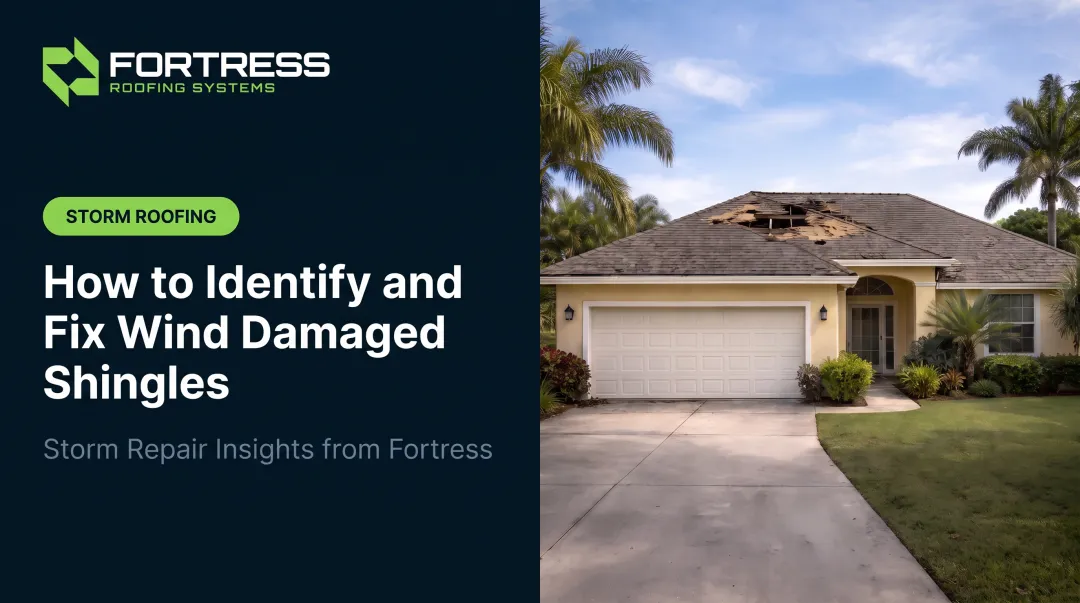
Missing or Blown-Off Shingles
- Symptoms: Bald patches on the roof, exposed underlayment, visible nail heads
- Likely cause: High winds, poor original installation, or aged sealant strips that no longer bond shingles together
Cracked or Split Shingles
- Symptoms: Visible fractures, brittle edges that snap when touched
- Likely cause: Sun and UV exposure, thermal cycling between hot days and cool nights, or hail impact
Curling or Buckling Shingles
- Symptoms: Edges lifting away from the roof deck or the whole shingle warping
- Likely cause: Poor attic ventilation, moisture trapped beneath the shingle, or simple aging
Granule Loss and Bald Spots
- Symptoms: Gritty debris collecting in gutters, shiny or dark patches on the shingle surface
- Likely cause: Age-related asphalt breakdown, hail impact, or foot traffic during past repairs
A small amount of granule shedding right after installation is normal. GAF notes that loose "rider" granules diminish over time. Concentrated bald spots later on are a different story.

Why Asphalt Shingles Fail (Root Causes)
Shingle failure traces back to a handful of real-world stressors:
- Heat and UV exposure dry out asphalt and wear away protective granules
- Wind uplift lifts tabs, breaks seal strips, and tears shingles free
- Poor ventilation traps attic heat and humidity that cook shingles from below
- Sloppy installation (bad nailing, missing starters, weak flashing) fails early
- Skipped inspections let small problems turn into active leaks
Ventilation matters even more in South Florida. Proper ridge, intake, and soffit airflow keeps attic heat and humidity from building up. Without it, moisture gets trapped under the shingles and speeds curling and cracking.
Left unfixed, failed shingles set off a costly cascade:
- Water reaches exposed underlayment and turns into interior leaks
- Trapped moisture rots the deck boards below
- Mold spreads into the attic and, eventually, living space
- Damaged insulation and poor attic airflow drive up cooling bills
- A $200 patch can become a five-figure interior repair
South Florida's combination of intense sun, near-constant humidity, and seasonal hurricane winds compounds every one of these factors. A roof that might coast along quietly in a drier climate gets tested here every single season.
How to Repair Asphalt Shingle Roof Damage (Step-by-Step)
Skipping the diagnosis step is the fastest way to waste a Saturday and still have a leak. Confirm exactly what's damaged and how far it extends before you touch a single shingle.
Step 1: Inspect and Identify the Damage
- Check from the ground first, then from the roof if it's safe to do so
- Look inside the attic and at ceilings for water stains. Those mean the leak has already reached the underlayment
- Note whether the damage is isolated to a few shingles or spread across a wider section
Step 2: Gather Tools and Matching Replacement Shingles
You'll need:
- Pry bar and hammer
- Utility knife
- Roofing nails
- Roofing cement or sealant (ASTM D4586 Type I or II)
- Safety gear: gloves, eye protection, non-slip shoes
Matching the replacement shingle's color and style matters. A mismatched patch stands out from the street and can hurt resale value.
Step 3: Remove the Damaged Shingle
- Gently lift the surrounding shingle tabs with a pry bar to break the seal without tearing them
- Pop and remove the exposed roofing nails, working from the row above downward
- Clear away old roofing cement and debris to leave a flat surface for the new shingle
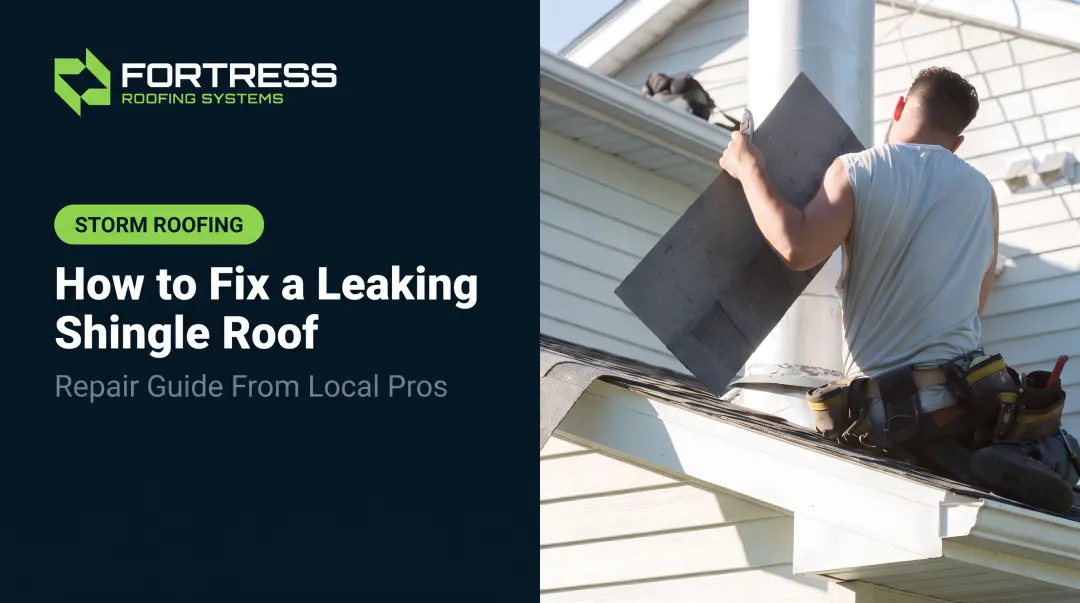
Step 4: Install the Replacement Shingle and Seal
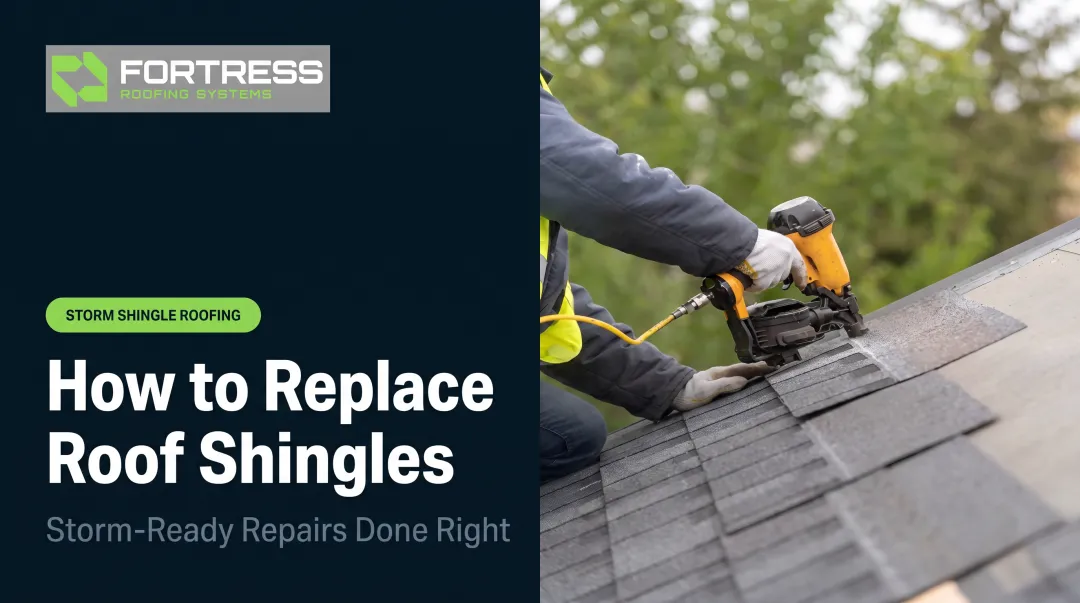
Slide the new shingle into place, aligning it with the surrounding courses. Nail it following the original nailing pattern so the nails end up covered by the shingle above. Nails should penetrate the deck by at least 3/4 inch, driven flush rather than over- or under-driven.
Apply roofing cement under the tabs and along the edges. Use about a quarter-sized amount per spot; too much can cause blistering or run down the shingle face.
Step 5: Test and Monitor the Repair
- Confirm the shingle sits flush with no lifted edges or visible gaps
- Watch the patched area after the next heavy rain or storm for signs of a repeat leak
- Recheck the attic and ceilings for new stains if the original leak had already reached the interior

For storm-related or widespread damage, bring in a professional inspection. Fortress Roofing Systems offers service within 72 hours across South Florida, including inspections and insurance claims assistance for storm-damaged roofs.
When Should You Repair vs. Replace Your Asphalt Shingle Roof?
Repair costs, roof age, and the extent of damage all factor into this decision. There's no single rule, but a few common scenarios cover most homeowners.
Scenario 1: Isolated Damage on a Newer Roof
- Repair: A handful of missing or cracked shingles on a roof under 10 years old is a straightforward patch job
- Replace: Not needed unless the same spots keep failing repeatedly
Scenario 2: Widespread Granule Loss or Curling
- Repair: Temporary patching can work if damage stays fairly limited
- Replace: Full replacement makes more sense once granule loss is widespread and the roof is nearing the end of its expected life
Scenario 3: Roof Nearing or Past Manufacturer Lifespan
- Repair: Rarely cost-effective at this stage. It buys a little time, nothing more
- Replace: Recommended, ideally through a Master Elite installer offering strong manufacturer-backed warranty coverage
Scenario 4: Major Storm or Hurricane Damage
- Repair: Only appropriate for minor, isolated impact damage
- Replace: Recommended when decking is compromised or large sections are affected

When replacement is the right call, Fortress Roofing Systems helps with insurance claims to offset costs and offers financing plans so you can spread payments instead of facing one large upfront bill.
Mistakes to Avoid & Preventive Maintenance
Common repair mistakes:
- Over-applying roofing cement, which can cause blistering or trap moisture
- Ignoring the root cause, like poor ventilation, and just patching the symptom
- Skipping a post-repair inspection after the first big storm
- Mismatching shingle types or colors, which weakens the seal and looks patchy
Preventive maintenance:
- Schedule inspections twice a year, spring and fall
- Clear gutters and roof debris regularly so water doesn't pool
- Address ventilation issues early, before they cause curling or trapped moisture
Hidden damage rarely shows up from the ground. After a major South Florida storm, a professional inspection catches lifted shingles, weakened seals, and structural issues before they turn into a much larger repair bill.
Conclusion
Most asphalt shingle problems are fixable when caught early and diagnosed correctly. Whether repair or replacement makes more sense comes down to roof age, how widespread the damage is, and long-term cost. A quick professional inspection can settle that call before small damage turns into a full replacement.
Fortress Roofing Systems has served South Florida homeowners for more than 15 years with fast, reliable inspections and repairs, including free assessments and service within 72 hours across Miami-Dade, Broward, Palm Beach, Martin, and St. Lucie counties.
Frequently Asked Questions
Can you patch a shingle roof?
Yes. Small areas of damage can be patched using replacement shingles and roofing cement. This is often a temporary or partial fix, depending on how extensive the damage is.
What type of roof patch is best for asphalt shingles?
Matching asphalt shingles combined with roofing cement or sealant work best for small areas. Larger damaged sections may need rolled roofing or fiberglass reinforcement instead.
How much does it cost to repair an asphalt shingle roof?
Nationally, repairs typically run $360 to $1,750, averaging around $960, according to Angi's cost guide. Your actual cost depends on damage size, materials, and whether it's a single-shingle patch or a multi-shingle job.
How long does an asphalt shingle roof repair last?
A well-done repair can last several years, but longevity depends on the age of the surrounding roof and the quality of materials used in the patch.
Can I repair my roof myself, or should I hire a professional?
Minor patches on a low, safely-accessible roof can be DIY. Steep roofs, storm damage, or larger sections are safer and more reliably handled by a licensed professional.
Will insurance cover asphalt shingle roof repair?
Wind or hail damage is often covered under homeowners insurance, though coverage depends on your specific policy and the cause of damage. If you file a claim, a contractor like Fortress Roofing Systems can help with documentation and working with your adjuster.