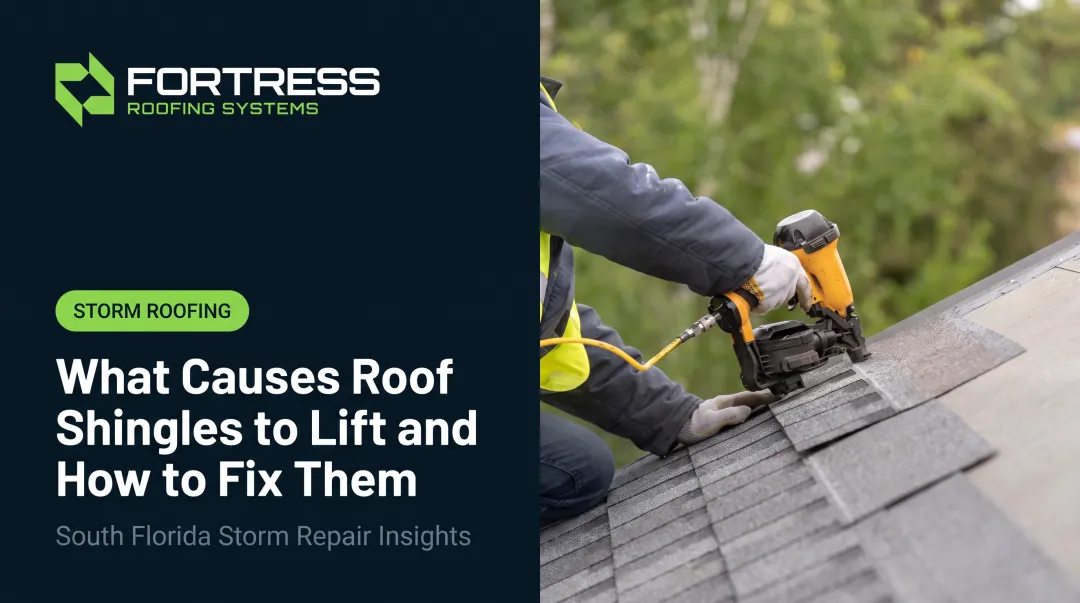
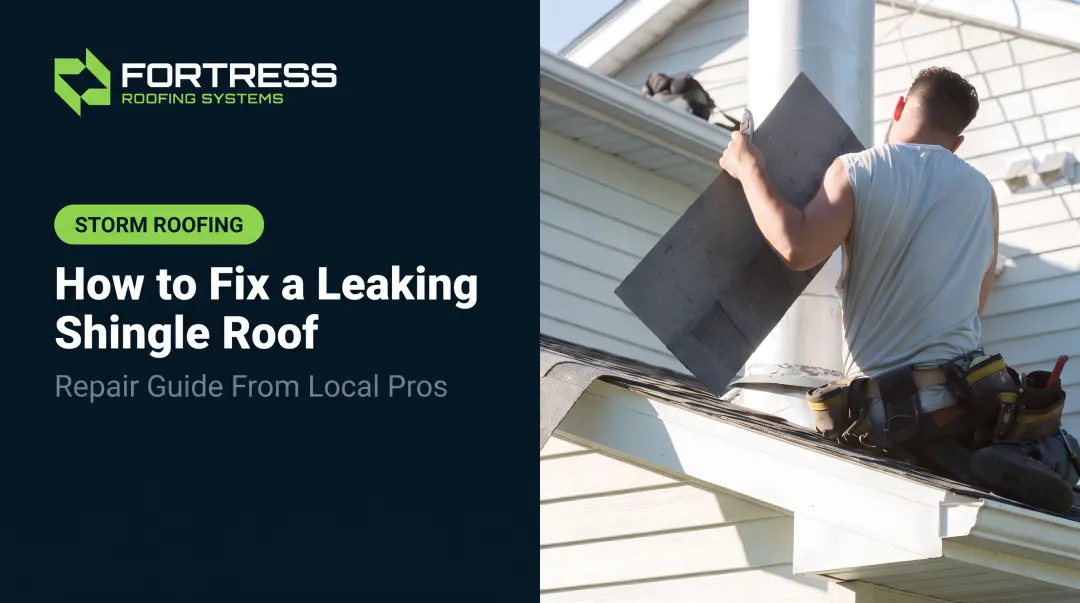
Between year-round heat cycling and hurricane season winds, small problems escalate quickly. A lifted shingle that seems cosmetic today can mean a soaked attic deck within weeks. Causes range from ordinary wear and age to storms and rushed installation work.
This article walks through what causes loose shingles, how to diagnose and fix them step by step, when repair beats replacement, and when it's time to call a licensed professional like Fortress Roofing Systems.
TL;DR
- Failed seal strips, popped nails, wind uplift, and aging adhesive cause most loose shingles
- Early-stage issues usually respond to resealing or renailing; widespread lifting often means replacement
- Fix process: inspect, diagnose the cause, apply the correct repair, then test
- Call a pro if the pitch is steep, the decking feels soft, or storm damage is widespread
What Are Loose Roof Shingles?
Shingles stay locked down two ways: mechanical nails and a heat-activated adhesive seal strip. That strip bonds to the shingle above it once sun exposure warms it enough to soften and fuse.
A "loose" shingle means one or both of these connections have partially failed. The edge lifts, but the shingle hasn't detached yet.
It’s an early-stage problem. In Florida's heat and storm exposure, an unaddressed loose shingle rarely stays static. It typically worsens with the next wind event or heat cycle, pulling neighboring shingles loose along the way.
Common Problems With Loose Shingles
Shingle failures in South Florida tend to follow the same handful of patterns, tied directly to storms and constant heat cycling.
| Problem | Symptoms | Likely cause |
|---|---|---|
| Lifted or curling edges | Edges raised, flapping in wind | Failed adhesive seal strip from age or poor installation |
| Popped or exposed nails | Nail heads visible; shingle shifts when pressed | Heat cycling, or nails driven above the manufacturer's nail line |
| Cracked or brittle shingles | Cracking when lifted, granule loss near loose areas | UV and heat aging the asphalt |
| Water stains in the attic | Discoloration on rafters, damp insulation | Wind-driven rain entering through lifted seams |

Spot which pattern matches your roof before you climb up—the fix depends on whether you’re resealing an edge, resetting a nail, or replacing a damaged shingle.
Why Shingles Come Loose in South Florida
Local conditions create failure patterns you won't see as often farther north.
- Hurricane and tropical storm wind uplift — tab uplift starts at edges, corners, and ridges where wind loads concentrate (NRCA Hurricane Andrew analysis)
- Intense UV exposure and heat cycling — adhesive degrades under repeated South Florida sun and heat
- Improper installation — rushed sealing or nails placed above the manufacturer's nail line
- Skipped inspections — minor lifting after storm season goes unnoticed until the next event
Ignoring loose shingles doesn't just risk a leak. It can trigger:
- Cascading shingle loss across the roof field as wind finds each new weak point
- Water intrusion leading to deck rot and mold
- Insurer pushback if damage looks like ongoing neglect rather than a sudden covered event
- Full roof replacement costs if left unaddressed for years

How to Fix Loose Roof Shingles (Step-by-Step)
Diagnosing the exact cause first saves time and prevents repeat failures. A seal-strip fix won't hold if the real problem is a popped nail, and vice versa.
Only get on the roof with a stable ladder and fall protection, and skip the climb in wind or wet conditions. If you are not set up for safe roof work, hire a professional for the inspection and repair.
Step 1: Inspect From the Ground and Attic
- Use binoculars to spot lifted, curling, or flapping edges from ground level
- Check the attic for water stains, damp insulation, or visible daylight gaps
- Photograph everything — useful for both your records and any future insurance claim
Step 2: Determine the Cause
- Seal strip issue: the shingle edge lifts easily by hand, but nails hold firm
- Nail failure: the shingle shifts sideways because nails have backed out
- Soft decking: probe beneath the shingle for soft spots; hidden rot changes the entire repair plan
Step 3: Apply the Right Fix
If the seal strip has failed: Apply roofing cement under the shingle edge at a few key points and press firmly. GAF notes its thermally activated sealant needs temperatures above 40°F to bond properly, so work on warm, dry days to avoid cracking brittle shingles (GAF cool-weather installation guidance).
If nails have popped or are missing: Remove the old nails and drive new corrosion-resistant nails through the manufacturer's nail line, then seal each nail head with roofing cement to block new leak points.
If storm damage caused widespread lifting: Multiple loose shingles after a hurricane or high-wind event often mean systemic damage, not a one-shingle fix. Document everything for insurance before any work, and have a professional assess whether a targeted repair or full replacement is the safer path.
Step 4: Test and Monitor
- Run a water test with a helper checking the attic for leaks
- Watch the repaired area through the next storm or high-wind event
- Re-inspect after two weeks to confirm nothing has lifted again

When Should You Fix vs. Replace Loose Shingles?
The right call depends on roof age, storm exposure, and what's happening underneath the shingles, not a fixed damage percentage.
| Scenario | Fix | Replace |
|---|---|---|
| A few loose shingles, roof under 10 years old | Reseal or renail affected shingles | Not needed unless surrounding shingles are brittle |
| Loose shingles after a major hurricane, large sections affected | Possible if damage is isolated to one slope | Full section or roof if uplift is widespread |
| Loose shingles plus soft decking or attic mold | Not recommended: patching over rot recurs | Deck repair and reroofing required |
| Roof nearing 15-20 years old, recurring loose shingles | Temporary relief only | Full replacement is usually more cost-effective |
Fortress Roofing Systems' inspection teams weigh the same factors on site: localized versus widespread damage, granule thinning, recurring leaks that point to underlayment failure, and overall roof age. Replacement is recommended only when an inspection confirms it's warranted.

Common Mistakes to Avoid
A solid repair still fails when materials or technique fall short. Avoid these common errors:
- Using general-purpose caulk instead of roofing cement — it fails within months under South Florida sun
- Nailing above the manufacturer's nail line — this cuts wind resistance when storms hit
- Skipping the water test after a repair — leaks often show up only under real pressure
- Working in wet or cold conditions — shingles crack instead of sealing properly
Preventive Measures to Avoid Future Loose Shingles
A little maintenance now beats an emergency repair during storm season.
- Schedule inspections before and after hurricane season
- Address minor lifting immediately, before wind makes it worse
- Ensure proper attic ventilation to slow heat-driven adhesive breakdown
- Work with a Master Elite Installer for storm-rated materials and warranty-backed repairs
Fortress Roofing Systems' pre-season inspections check for loose or missing shingles, damaged flashing, soft spots, worn sealants, and areas vulnerable to wind uplift. Catching those issues early keeps small problems from failing when hurricane season hits.
Conclusion
Most loose shingle problems are fixable quickly, but only if you diagnose the actual cause first. Sealing over a nail problem, or nailing over rot, just buys you a repeat failure.
South Florida's combination of intense heat and hurricane risk makes loose shingles a fast-escalating issue, not a cosmetic one. What starts as one lifted tab can spread across a roof field after the next storm.
When a tab is already lifting, a correct diagnosis matters more than a quick patch. Fortress Roofing Systems serves homeowners across Miami-Dade, Broward, Palm Beach, Martin, and St. Lucie counties with repairs within 72 hours and insurance claims assistance.
Frequently Asked Questions
Can loose shingles be repaired or reattached?
Most loose shingles can be resealed or renailed if the decking is solid and damage is limited to a few areas. Widespread lifting across the roof usually points toward replacement instead.
What should I do if my roof shingles are falling off?
Document the damage with photos, check your attic for leaks or daylight gaps, and contact a licensed roofer promptly. Waiting allows the problem to cascade to nearby shingles.
How can I check if my roof shingles are loose?
Inspect from the ground with binoculars, looking for lifted, curling, or flapping edges. Then check your attic for water stains, damp insulation, or visible light coming through the deck.
What causes loose shingles?
Seal-strip failure, wind uplift, improper nailing, and age-related adhesive breakdown are the primary causes. In South Florida, heat cycling accelerates all of them.
Are roof shingles supposed to be loose?
No. Properly installed shingles should lie flat and sealed against the roof surface. Any lifting, curling, or flapping means a seal or fastener has already failed.
How urgent is it to fix loose shingles in South Florida?
Given hurricane risk and constant heat cycling, address loose shingles within one to two weeks. Waiting longer increases the odds of cascading damage across the roof field.