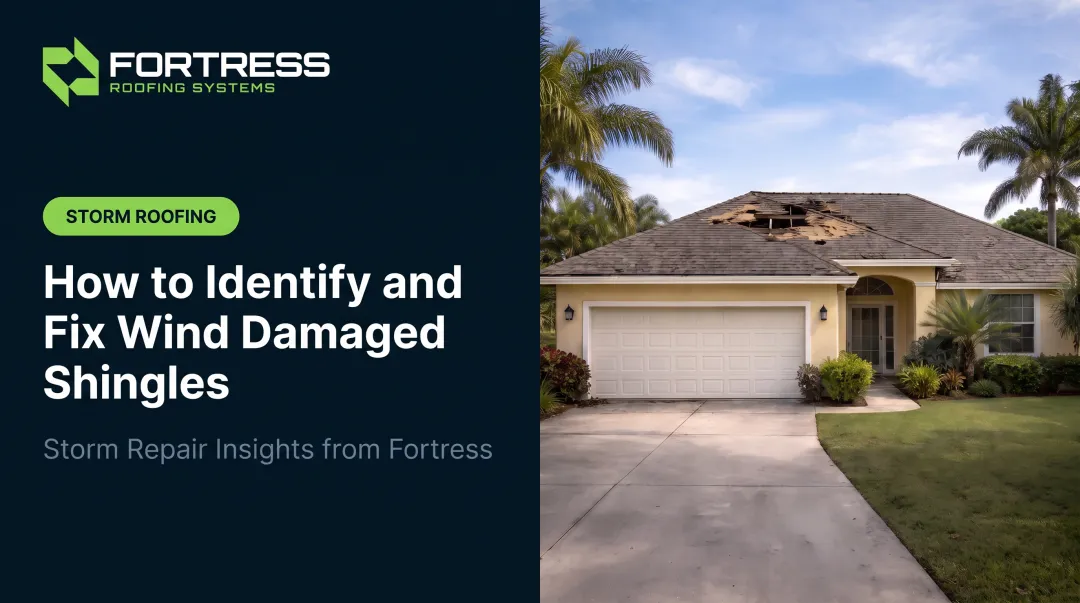
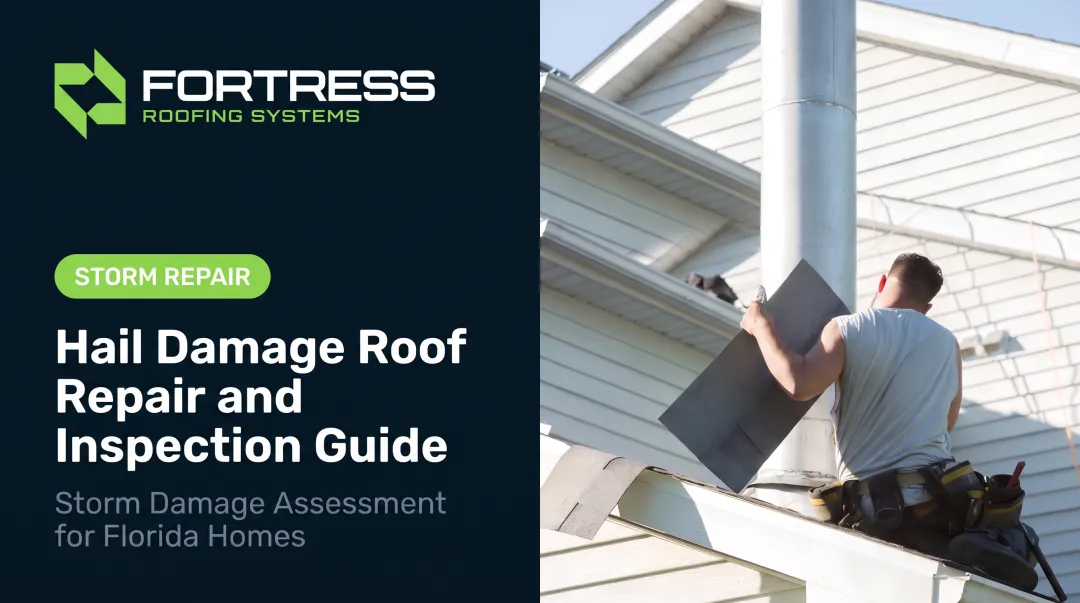
Storm damage isn't always this obvious, though. A lot of roof problems hide until the next heavy rain, and by then you're dealing with leaks, mold, and interior repairs that cost far more than the roof itself. This guide covers the warning signs to check for, what to do in the first few days, how to decide between repair and replacement, and how to handle your insurance claim without getting burned twice.
Key Takeaways
- Missing shingles and granule loss are easy to spot, but hidden damage under the surface often needs a professional inspection
- Reporting damage and starting emergency repairs promptly protects both your home and your insurance claim
- Repair-versus-replace decisions hinge on roof age, damage spread, and decking condition — not a fixed percentage
- Storm chasers target hurricane-hit neighborhoods; know the red flags before signing anything
Signs of Storm Damage on Your Roof
Storm damage isn't always visible from the driveway. Some of the worst problems, like a cracked underlayment or a slowly failing seal, only show up once you know where to look — outside and inside.
Exterior Warning Signs
- Missing, cracked, or curled shingles — high winds can lift and tear tabs loose, exposing the underlayment beneath
- Dented shingles or metal panels from hail, often paired with granule loss piling up in gutters or downspouts
- Loose or missing flashing around chimneys, vents, and skylights, a common entry point for water
- Debris, fallen limbs, or visible punctures in the roof surface
Interior Warning Signs
- Water stains or discoloration — appear on ceilings and walls after heavy rain
- Musty odors or mold growth — usually point to a slow leak that's been active for a while
- Daylight through the attic roof deck — a clear sign of a breach
One failed shingle tab can start a chain reaction. Once wind gets underneath it, neighboring shingles loosen too, and the exposed underlayment starts taking on water with every storm that follows.

What to Do Immediately After Storm Damage
Skipping steps here can cost you both your safety and your insurance payout. Follow this order:
Step 1: Prioritize Safety
- Stay off the roof, and steer clear of downed power lines or standing water near the exterior
- Check for structural sagging or major breaches before entering rooms directly below damaged sections
Step 2: Prevent Further Damage
- Only use tarps yourself if it's safe. Otherwise, call a licensed contractor for emergency tarping
- Move furniture and valuables away from active leaks and place buckets to catch dripping water
Florida's Chief Financial Officer's office advises homeowners to make only the emergency repairs needed to limit further damage and to keep every receipt.
Step 3: Document Everything for Insurance
- Take wide-angle and close-up photos or video of all damage before any cleanup starts
- Record the date and suspected cause (wind, hail, fallen tree) for your claim file
Step 4: Schedule a Professional Inspection
A certified contractor can spot hidden damage under shingles, flashing, and decking that's invisible from the ground. That includes thinning granules, recurring leak paths, and early underlayment failure.

Fortress Roofing Systems offers rapid-response inspections within 72 hours across its five-county South Florida service area (Miami-Dade, Broward, Palm Beach, Martin, and St. Lucie), helping homeowners get ahead of secondary damage before it spreads.
Repairing Storm Damage: Fix or Replace?
The right call depends on roof age, how widespread the damage is, and what your decking looks like underneath — not a magic percentage. GAF's own repair guidance distinguishes small, localized damage from significant or widespread problems, without prescribing a universal cutoff [24].
Scenario 1: Isolated Shingle or Flashing Damage A localized repair usually handles this fine if the rest of the roof is healthy. Replacement isn't necessary unless the roof is already near the end of its service life.
Scenario 2: Widespread Wind or Hail Damage When damage spreads across multiple roof sections, patchwork rarely survives the next storm. Full replacement is the safer call, especially if the decking or structure underneath shows wear.
Scenario 3: Roof Nearing End of Lifespan A patch might buy a few months, but it's not a good long-term investment. NRCA notes most roofs are designed for around 20 years, with lifespan varying by material, climate, and installation quality [1]. Pairing a replacement with an approved insurance claim often makes the most financial sense here.
Scenario 4: Structural or Decking Damage Patch jobs rarely hold when truss or decking damage is involved. Replacement becomes necessary both for safety and to satisfy future inspections or insurance requirements.

One more factor shapes the budget in Florida. Florida's 25% rule: Florida Building Code (R908.1.1) requires full compliance upgrades once more than 25% of a roof section is repaired within 12 months [8]. That's a code trigger, not an automatic insurance payout. Don't confuse the two when budgeting for repairs.
Insurance Claims and Avoiding Contractor Scams
After major storms, "storm chasers" show up fast, often with pressure tactics aimed at homeowners who are still in shock. Knowing the process protects your wallet and your roof's warranty.
The basic claim process:
- Report damage to your insurer promptly
- Get a written, itemized estimate from a licensed contractor
- Allow the adjuster to inspect before permanent repairs begin
- Proceed with approved work once coverage is confirmed
Florida law generally requires insurers to acknowledge communications within 7 days and pay or deny claims within 60 days of notice. Follow up if you haven't heard back [19].
While your claim is open, watch for these contractor red flags:
- Contractors offering to pay or waive your deductible (illegal under Florida Statute 489.147) [6]
- Demands for full cash payment upfront
- Pressure to sign a contract before an adjuster has inspected
- No written estimate or unclear scope of work

Always verify a contractor's Florida license through the Department of Business and Professional Regulation (DBPR) before signing anything [22]. Fortress Roofing Systems provides dedicated insurance claims assistance: documenting damage, preparing paperwork, and communicating directly with adjusters.
Preventing Future Storm Damage
Proactive maintenance is cheaper than reactive repair, every time.
- Schedule roof inspections annually or before hurricane season starts
- Trim overhanging branches and clear gutters regularly
- Consider impact-resistant shingles or metal roofing built for high-wind zones
- Ensure flashing is properly sealed and ventilation meets code
IBHS found that homes meeting the FORTIFIED Roof standard saw 15-40% lower claim severity and at least 55-74% lower loss frequency after Hurricane Sally [3]. Stronger roofing systems cut how often claims happen and how costly they get.
Fortress installs Class 4 impact-rated Storm Shingle systems rated for 150 MPH winds, along with metal roofing built for South Florida conditions. Master Elite-certified installers and 15+ years of regional experience help these roofs hold up when the next storm hits.
Frequently Asked Questions
What should I do if my roof is leaking during a storm?
Move belongings away from the leak, place a bucket to catch water, and stay off the roof until the storm passes and conditions are safe.
Will my roof leak if shingles blow off during a storm?
Yes. Exposed areas without shingle coverage are highly vulnerable, especially during continued rain. Tarp or repair these spots as quickly as it's safe to do so.
How do I know if storm damage is covered by insurance?
Most policies cover wind and hail damage but exclude normal wear and tear. Review your policy or ask your agent for specifics on your coverage.
How long does storm damage roof repair take?
Minor repairs are often finished same-day or next-day. Full replacements typically take 1-3 days, depending on roof size and material.
Can I stay in my home during storm damage roof repairs?
Yes, most repairs don't require leaving the property, though expect some noise and temporary access restrictions near the work area.
How soon should I call a roofer after a storm?
Contact a professional within 24-72 hours to limit further water intrusion and document damage for your insurance claim.