Underneath every tile roof sits a waterproof membrane called underlayment, and it doesn't last nearly as long as the tiles above it. Unlike a shingle roof, where cracked or curling shingles give you an obvious visual warning, tile roofs hide underlayment failure until water is already dripping into your attic.
This guide covers the warning signs, the actual replacement process, material choices, costs, and how to pick a qualified South Florida tile roofing contractor, including what to expect from a company like Fortress Roofing Systems.
Key Takeaways
- Underlayment often fails years before tiles need full replacement
- Intact tiles can usually stay in place during underlayment work
- South Florida heat, humidity, and storms make material choice critical
- Professional installation protects warranties and prevents costly hidden leaks
Signs Your Tile Roof Underlayment Needs Replacing
Here's the tricky part about tile roofs: the membrane doing the actual waterproofing work is invisible. You won't see it degrading. You'll see the consequences of degradation, usually during a heavy storm, when water finds its way through a compromised layer and into your living space.
Interior warning signs include:
- Water stains spreading across ceilings or upper walls
- Musty odors in the attic (a sign of trapped moisture)
- Visible drips or active leaks during rainfall
Signs found on the roof or in the attic:
- Cracked, brittle, or curling underlayment visible at tile edges
- Tiles that have slipped, cracked, or gone missing
- Sunlight visible through gaps in the roof deck when viewed from the attic

Age matters too. According to NRCA guidance, most residential roof systems are designed for roughly a 20-year service life. Actual lifespan still varies with climate, material, and maintenance.
In Florida, intense heat and UV exposure put real stress on underlayment membranes. The Florida Roofing and Sheet Metal Contractors Association treats these conditions as central when choosing tile underlayment materials.
Don't wait for a leak to inspect your roof. If your tile roof is more than 15 years old and you haven't had the underlayment checked, it's worth a professional look.
Step-by-Step: How Tile Roof Underlayment Replacement Works
Replacing underlayment on a tile roof is more delicate than a standard shingle tear-off. Tiles have to come off carefully, get stored safely, and go back on without cracking. Here's the general process.
- Inspection first. A contractor confirms whether your tiles are salvageable and whether the deck is solid. That means checking for extensive tile breakage, recurring leak patterns that point to underlayment failure, and overall deck condition before recommending next steps.
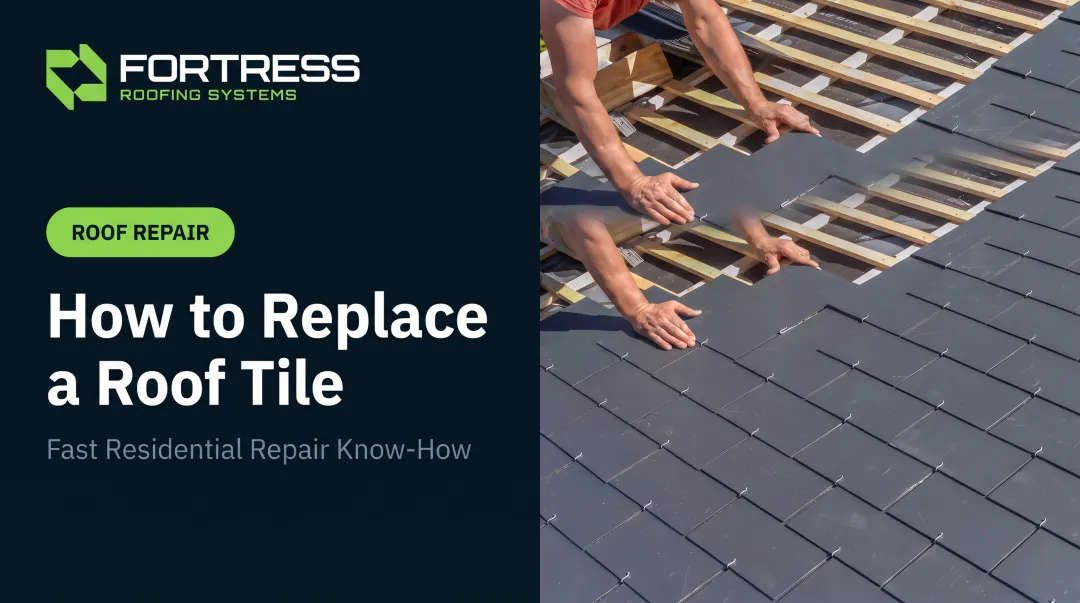
- Tile, batten, and flashing removal. Existing tiles are lifted and set aside for reuse, along with battens and flashing where they're still in good shape.
- Tear-off and deck inspection. The old underlayment comes off completely, exposing the roof deck for a close inspection. Crews repair any rot or damage here before the new membrane goes down.
- New underlayment installation. A self-adhering synthetic or high-weight membrane is installed starting at the eaves and working up toward the ridge, with each course overlapping the one below it.
- Reinstallation of tiles and flashing. Battens, flashing, and the original tiles go back on, with any tiles that broke during removal replaced to match.

Timelines vary by roof size and tile type. What usually drives the schedule:
- Roof size and pitch
- Tile type and condition
- How much deck repair shows up after tear-off
Residential projects in South Florida often finish within 1-3 days, though larger or more complex tile roofs can take longer. Fortress Roofing Systems' Master Elite Installers focus on careful tile handling throughout, because every cracked tile adds cost and time.
Choosing the Right Underlayment Material for Tile Roofs
Underlayment choice matters more in South Florida than almost anywhere else in the country. Heat, UV, and hurricane-season rain punish weak materials fast.
The three main categories:
- Asphalt-saturated felt — the traditional option, but offers less tear strength and durability than newer alternatives
- Synthetic (mechanically fastened) — lighter and more tear-resistant than felt; GAF Tiger Paw, for example, delivers over 600% greater tear strength than standard No. 30 felt
- Self-adhering/rubberized membranes — bond directly to the deck and deliver strong waterproofing under tile in high-heat environments
Synthetic and self-adhering products are preferred under tile roofs. They hold up better against Florida's intense heat, UV exposure, and wind-driven rain.

One caveat: a UV exposure rating (often around 180 days of temporary exposure before tile goes on) is not the same as installed service life. Don't confuse the two when comparing products.
Whatever material you select also needs to meet Florida Building Code requirements for tile underlayment. In Miami-Dade or Broward County, it must satisfy High-Velocity Hurricane Zone (HVHZ) standards as well.
Fortress Roofing Systems installs underlayment backed by manufacturer and workmanship warranties, with every complete roofing system built to manufacturer specs and local code.
Underlayment Replacement vs. Full Roof Replacement
This is often the biggest question homeowners have: do I need a whole new roof, or just a new membrane underneath my existing tiles?
Underlayment-only replacement makes sense when:
- Tiles are intact, structurally sound, and free of widespread cracking
- The roof deck is solid with no rot or sagging
- Damage is localized rather than spread across the whole roof
Full replacement becomes necessary when:
- Tile damage is extensive rather than isolated
- Your tile profile is discontinued and matching replacements aren't available
- Structural decking issues turn up once the old underlayment comes off
Fortress Roofing Systems' inspectors look for these exact conditions during their initial assessment. Extensive tile breakage, recurring leaks, sagging, and storm damage all factor into the recommendation.
When the deck is solid and problems are contained, a specialty repair or underlayment-only replacement is often the more sensible (and more affordable) path. Get a professional inspection before assuming the worst—the choice between a targeted underlayment job and a full tear-off drives most of your final cost.

What Does Tile Roof Underlayment Replacement Cost?
Cost estimates vary widely depending on roof size, tile type, and how much of the substructure needs repair. National data from Angi's 2026 roofing cost report puts general underlayment replacement in the $300 to $8,200 range, with tile-specific projects often landing closer to $3,600 to $4,200.
Those figures don't reflect South Florida labor rates or the extra work of lifting and resetting tile.
Why labor dominates the bill:
- Tiles must be carefully lifted, staged, and reset by hand
- Some tile breakage during removal is normal and expected
- Skilled crews and longer project timelines drive most of the total cost
Insurance can help, depending on the cause. If underlayment failure came from storm damage, wind, or a falling tree, your policy likely covers it. Age-related wear is less likely to qualify, and older roofs may settle at actual cash value rather than full replacement cost.
Fortress Roofing Systems provides insurance claims assistance for South Florida homeowners, including damage documentation and communication with adjusters.
Frequently Asked Questions
How long does a roof underlayment last?
Tile roof underlayment generally wears out well before the tiles themselves, especially in hot, humid climates like South Florida. Have it professionally inspected once your roof passes the 15-year mark.
Will a roof leak with just underlayment?
Underlayment alone can offer temporary water resistance, but it's not designed as a permanent roof covering. Exposed underlayment should be covered with tile promptly to avoid weather damage.
Does underlayment go on the entire roof?
Yes. Underlayment covers the full roof deck, installed in overlapping courses running from the eaves up to the ridge for complete water protection.
What are the three types of roofing underlayment?
Felt, synthetic, and self-adhering (rubberized) membranes. Synthetic and self-adhering options generally perform better under tile in hot, storm-prone climates.
Can underlayment be replaced without removing all the tiles?
No. Tiles need to be lifted and reset to properly access the deck and install a new membrane underneath them.
Is underlayment replacement covered by insurance?
Storm-related damage, like wind or fallen debris, is often covered under a standard homeowners policy. Age-related wear typically is not, so check your specific policy.
Protect Your Tile Roof with Fortress Roofing Systems
Timely underlayment replacement protects your home's structure and extends the life of your tile roof investment. Waiting until you see interior water stains means the damage has already spread beyond the membrane.
Fortress Roofing Systems brings these credentials to every tile roofing project:
- Master Elite Installer certification
- 72-hour service guarantee
- Coverage across Miami-Dade, Broward, Palm Beach, Martin, and St. Lucie counties
Ready to find out what's really happening underneath your tiles? Call 772-207-3627 or email customer@fortressroof.com to schedule a professional tile roof underlayment inspection.